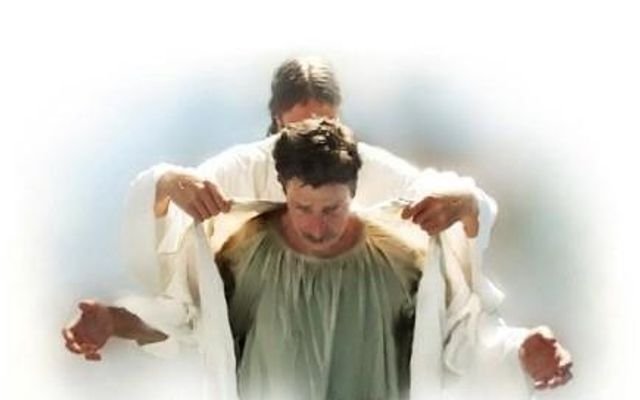
The Solid Rock: Healthy Spiritual Formation by Tim Tsohantaridis (2016–2017)

**I found these short essays that Tim had shared with me in one of my Dropbox folders for a spiritual formation book that never officially materialized, sadly. Reading over them, it is great to hear Tim’s wise, loving, beneficent, pastoral admonitions in my head again. I miss my friend and brother-in-Christ.**

The Strongest Foundation

Discipleship programs are foundational to church life today. They take many forms: small groups, intentional communities, cell groups, mid-week Bible studies, early morning men’s or women’s meeting at a popular coffee shop, house meetings, and so on. These opportunities for spiritual growth take a variety of approaches. Some use the teacher/student approach, others are discussions facilitated by a leader, and yet others are very informal where there is a honest openness to the sharing of ideas. All of these programs and others not listed here have a common goal. They are organized to promote spiritual growth, spiritual community, and help in the spiritual development of the people in these communities.

I propose that a very important subject for such groups to study is the development of the biblical foundation of each member’s life. It is not enough that we meet to share, study and pray. Every follower of Christ must posses a biblical foundation for his/her faith. Our philosophy of life (theology of life) must be built on a strong biblical foundation. In the following chapters, I will share the biblical basis for my life as an example. This I do as a lifelong follower of Christ. It was introduced to me during my seminary years at Gordon-Conwell Theological Seminary, when I was asked, “What was the basis for your calling to ministry that led you to the seminary?”

The nourishing of my soul started in the Greek Evangelical Churches in Katerini and Thessaloniki Greece, and later in the Greek Evangelical Church (Boston, MA) under the teaching of Rev. Argos Zodhiates. In the Newton United Presbyterian Church (Newton Corner, MA), I began to practice the skills of my calling under the guidance of Rev. Burton Smith, and was further encouraged by the Rev. James Brantingham of the Evangelical Friends Church in Newport, RI. To these men, I want to publicly say, “Thank you for believing in me;” to their churches, I want to say, “Thank you loving me, nourishing my soul, and for trusting me to practice my faith.” To the many individuals in these communities, “Thank you for being a Christian witness.”

These communities developed in me the hunger and thirst for God, and the passion for a systematic, study of the Holy Scriptures so that I could with the Apostle Paul with confidence say (Philippians 4:8-9), that I trained my mind, and I am also willing to put my life out there as an example of a Christian on his journey with Jesus Christ and the Church.

My Biblical Theology of Life

“And Jesus grew in wisdom and stature, and in favor with God and men.” (Luke 2:52)

“Finally, brothers, what is true, whatever is noble, whatever is right, whatever is pure, whatever is lovely, whatever is admirable – if anything is excellent or praiseworthy – think about such things.  Whatever you have learned or received or heard from me, or seen in me – put it into practice. And the God of peace will be with you.” (Philippians 4:8,9)

“Watch your life and doctrine closely. Persevere in them, because if you do, you will save both yourself and your hearers.” (1 Timothy 4:16)

“Make it your ambition to lead a quiet life, to mind your own business and to work with your hands, just as we told you, so that your daily life may win the respect of outsiders and so that you will not be dependent on anyone.” (1 Thessalonians 4:11,12)

“Therefore, since we are surrounded by such a great cloud of witnesses, let us throw off everything that hinders and the sin that so easily entangles, and let us run with perseverance the race marked out for us. Let us fix our eyes on Jesus, the author and perfecter of our faith.” (Hebrews 12:1,2)

“….whom I love in the truth…all who know the truth, because of the truth, which lives in us and will be with us forever.” (2 John 1,2:)

“For this reason, make every effort to add to your faith, goodness; and to goodness, knowledge; and to knowledge, self-control; and to self-control, perseverance; and to perseverance, godliness; and to godliness, mutual affection; and to mutual affection, love. For if you possess these qualities in increasing measure, they will keep you from being ineffective and unproductive in your knowledge of our Lord Jesus Christ.” (2 Peter 1:5-8)

The Essence

The following great hymn of the church captures the essence of the foundation upon which a life should be built upon.  The strength and stability of such a foundations give the person the confidence to live life fully. It provides something or someone to lean on, be supported by, and fill one with hope and stay. Jesus had such a foundation and was able to grow in all areas of His life completely. Luke tells (Luke 2:52) of Jesus growing up in all area of His life. All aspects of His personality (spiritual, physical, emotional, social, and intellectual) are mentioned.

“The Solid Rock”

by Edward Mote, 1797–1874

1. My hope is built on nothing less
Than Jesus' blood and righteousness;
I dare not trust the sweetest frame,
But wholly lean on Jesus' name.

On Christ, the solid Rock, I stand;
All other ground is sinking sand,
All other ground is sinking sand.

2. When darkness seems to hide his face,
I rest on His unchanging grace;
In ev'ry high and stormy gale,
My anchor holds within the veil.

On Christ, the solid Rock, I stand;
All other ground is sinking sand,
All other ground is sinking sand.

3. His oath, His covenant, His blood
Support me in the whelming flood;
When all around my soul gives way,
He then is all my hope and stay.

On Christ, the solid Rock, I stand;
All other ground is sinking sand,
All other ground is sinking sand.

4. When He shall come with trumpet sound,
Oh, may I then in Him be found;
Dressed in His righteousness alone,
Faultless to stand before the throne.

On Christ, the solid Rock, I stand;
All other ground is sinking sand,
All other ground is sinking sand.

Here, we are given a glimpse of the healthy life built on a strong foundation. A quick observation around us would indicate that many over-emphasize an aspect of life, which they would like to develop.  All around us, we are encouraged to look good, to be healthy, to have the right job, the right home, the right car, to belong to the right group, etc. However, very little is pointing to a comprehensive growth. The hymn declares that one’s life will be built on nothing else.

The Eight Keys to Happiness

It was at a great turning point in his life that the Lord spoke these words to us, which today are known to us as "The Beatitudes." It was when he elected those twelve who would become his apostles, and thus assembled for himself the first nucleus of the body that would become his Church, that he addressed these words to the people. This is inferred from a combined study of Matthew and Luke. All night long he had taught her in prayer, and when the new day dawned, he called his disciples to him, and from them he elected twelve who would now become his apostles.

But the day had not progressed much, and crowds of people, Luke tells us, from all Judea and even from the shores of Tyre and Sidon flocked to the slopes of the mountain, where Christ was with his apostles, and brought their sick to him to heal. It was at some point on this day that Christ lifted his eyes and saw the multitudes of people who had surrounded him, and addressed to them this sermon, which begins with the Beatitudes.

From this sermon, we will take only its beautiful introduction, the Beatitudes, to make them, in a series of nine sermons, the subject of our special study. Today, we will not enter into the content of the Beatitudes, but will confine ourselves to a few general considerations. We will confine ourselves today to standing with that crowd on the mountainside, and to look at the Speaker and take a very general look at His speech.

Or rather, I would say that we will let Him gaze upon us, because that is how this sermon began, which had the Beatitudes as its introduction (and see the mobs), says Matthew (He opened His mouth and taught them). He saw the multitude of people, and there was something in that crowd of people that caused this speech. It was something the Lord saw beneath the surface of that crowd that invited Him, as it were, to address this speech to them. Many see the crowd, but do not see the people who make up the crowd.

But Christ, with the look He cast at that crowd, saw them one by one separately. His gaze embraced every special life represented in that crowd. And he bent down and watched this life carefully, and saw with how many unfulfilled desires this life was filled, and with how many hopes were dashed, and even how many disappointments and bitterness this life had experienced and how many tears it had shed.

That morning on that mountainside a conversation took place between the heart of that crowd and Him, who was the Maker of that heart. The heart said to its Maker, You created me to be an instrument of happiness, You created me to be a receiver of joy. You made me for laughter, for light, for music. But look at me how sin has descended me. Laughter withered on my lips, music faded from my life. And instead of joy, bitterness and pain and tears is my share of life. I have a great need, And that is to rediscover lost joy, to become an instrument of happiness again,

All this was said to Him by the heart of the crowd that morning, and He answered (open, says Matthew, his mouth), and told the crowd that it is possible to regain their lost happiness. This is the meaning of the Beatitudes. Blessed means happy. The beatitudes, then, are nothing but the Lord's answer to that prayer of the human heart to regain its lost happiness. It was as if the Lord said that morning to that crowd and to all of us (I saw your life, I felt your pain, I heard your prayer, and lo and behold, if you want to regain your lost joy, take these keys and unlock the secret of happiness).

That is why Christ came. This is the deeper reason for His coming into our world and into man's life. To give back to man the keys to happiness that he has lost. How misunderstood many people are about Christ's mission in the world. They say (Religion), they say (Gospel), they say (Faith) and in their minds immediately rises the cold and melancholy image of a monastery. People think that Christ came to steal the joy from their lives, that He came to make their lives poorer and uglier, when the reality is exactly the opposite. Christ came to make man's life richer and more beautiful and to give it back the joy it had lost because of sin.

The Best "Lord's Prayer"

I love Jesus's prayer in Matthew 6:9–13 for its uncomplicated message for believers wanting to be more like Him and aligning their expectations with the will of God. Clearly, Jesus's focus in His concise prayer is on the majesty, beneficence, and power of Father God in our lives.

After this manner therefore pray ye:

Our Father which art in heaven, Hallowed be thy name.
Thy kingdom come, Thy will be done in earth, as it is in heaven.
Give us this day our daily bread.
And forgive us our debts, as we forgive our debtors.
And lead us not into temptation, but deliver us from evil: For thine is the kingdom, and the power, and the glory, for ever. Amen.

This prayer is not focused on human empowerment at all; rather, it is all about what Father God can, does, and will do for His believers. Yet, progressivechristianity.org writer Francis Mcnab incorrectly and anthro-centeredly rewrites how we are to pray to God in the passage. First, note that Mcnab immediately removes the fatherhood of God (disregarding Jesus’s specific address as trivial or outdated). Then, note how many more times Mcnab adds us, we, and our compared to the original Scripture. Note the additions of “within us” to the passage (shifting the outward power of God to the inward power of His adherents). Note also Mcnab’s emotional emphases of avoiding anxiety, rising above ugly realities, overlooking stupid people, and feeling personal acceptance in life. Speaking of which, note how the kingdom of God is demoted to simply being the kingdom of life—which is what? Nature? And while Mcnab does end his translation with three “Yous,” readers are left to ponder just exactly who (or what) the “good caring presence” is that Mcnab refers to initially in his narcissistic version. Read for yourself:

Good caring presence within us, around us, and above us;
Hold us in a sense of mystery and wonder.
Let the fullness of your goodness be within us and around us;
Let all the world know your ways of caring and generosity.

May we find we have all we need
to meet each day without undue anxiety.
Overlook our many stupidities, and help us
to release everyone from their stupidities.

May we all know that we are accepted.
Strengthen us that we will reach out
to the best, always with the faith
to rise above the ugly realities of our existence.

And we celebrate the gifts you have given us
the rich kingdom of life’s possibilities
the power to do good and the triumphs of good
and the moments when we have seen
the glory and wonder of everything.

You are life’s richness.
You are life’s power.
You are life’s ultimate meaning –
Amen.

This is not a paraphrase of the Lord’s Prayer; it is a humanist, self-empowering, eisegetical revision wherein the profane replaces the Divine. Even Mcnab’s inclusion of “Amen” (So be it) at the end feels more like blasphemy than any affirmation of biblical truth. A better basic takeaway of the Lord’s Prayer might include the following conclusions:

  • We are to think of God as our divine Father (Jesus even calls Him, "Abba” [daddy], in Mark 14:36 and the apostle Paul calls Him, "Abba," in Romans 8:15 & Galatians 4:6).

  • God lives in heaven, is holy, and is the King of Kings.

  • God alone is our great Provider, our Mercy, our Model, our Protector, and our Deliverer.

  • Father God can all do all these things because He is the One, true, loving eternal God.

To flip the script might feel good to some (as in Mcnab’s Prayer) but it runs dangerously contrary to the reality of our relationship with God—according to Jesus Christ (and the Word of God). Ultimately, the authoritative prayer of Jesus requires His followers to be humble, unpolitical, submissive, supportive, and grateful to Father God—absolutely asserting the singularity of God's importance in our lives. There can be no greater or “good-er” news than that! Can I get an Amen?

A Comparison of “She Walks in Beauty” by Lord Byron and “La Belle Dame Sans Merci” by John Keats

In nineteenth-century English Literature, Lord Byron and John Keats are famous for their Romantic poetry, which often displays a lyrical and mystical connection between humanity and nature, specifically regarding individualism, idealism, and inspiration. The relationship of nature and humanity is often a central theme in Romantic literature with the detriments of society juxtaposed against the sublimity of the natural world.  It is this celebration of nature that leads some to suggest that “Romantic poems habitually endow the landscape with human life, passion, and expressiveness” (Greenblatt, 1373). Two such powerful poetical productions concerning this life, passion, and expressiveness are found in Byron’s poem, “She Walks in Beauty,” and Keats’ poem, “La Belle Dame Sans Merci.”  These poems have aspects that are quite similar and yet they also diverge in important ways.

Both of these poems focus on the phantasmal beauty of mysterious women who live in some wraithlike plane between real life and dreams, and who find their “haunts” in the natural world, but yet who nevertheless produce a romantic attraction to their male counterparts in these poignant poems. Though these writings and poets share some commonalities such as female beauty, mysterious bonds to nature, and male obsession with beauty, key differences remain that leads these poems to conclude much differently—one positively (Byron), and one negatively (Keats).

In regards to the shared aspect of feminine beauty that is presented by the poets, the two poems are both fixated on women of unusual loveliness and presence in nature. Keeping with Romantic literature style, the beauty of these women parallel the beauty of the world. Byron writes, “She walks in beauty, like the night Of cloudless climes and starry skies” (lines 1-2) and “And on that cheek, and o'er that brow, So soft, so calm, yet eloquent” (lines 13-14).  For his own ethereal lady, Keats writes, “I met a lady in the meads, Full beautiful—a faery’s child. Her hair was long, her foot was light, And her eyes were wild.” (lines 13-16). Byron’s description ironically does not clear up the appearance of his love for it is hard to see at nighttime and shadows often play tricks with the eyes. Similarly, Keats brings in a supernatural notion of fairies, which are considered by most to be mythological creatures of the imagination. So, are these visions of loveliness or delusions of emotion?

This is just the start of the narrators’ details of “reality” for their wraithlike women. Despite this unusualness about their women and their environs, both poets are clearly enamored by these fantastic females (although Keats’ lady may be a femme fatale) and are almost obsessed by their majesty.  Byron contemplates his loves’ facial features and states, “Where thoughts serenely sweet express How pure, how dear their dwelling place” (lines 11-12) and describing his own response to his woman’s charms, Keats remarks, “I set her on my pacing steed, And nothing else saw all day long, For sidelong would she bend, and sing A faery’s song” (lines 21-24).  Their looks are entrancing and the narrators linger to ponder their exquisiteness; in fact, one could easily correlate the intensity of inspiration of these women with the inspiration of their surreal surroundings.

Additionally, as alluded to earlier, both poems share in a mystical landscape wherein reality is unsure and the narrators could be dreaming or they could be in an enchanted scene.  Discussing the manifestation of his lady love, Byron writes, “One shade the more, one ray the less, Had half impaired the nameless grace” (lines 7-8).  This impairment limits full awareness of what is reality for Byron. Keats also offers his own twist on situational reality when he writes, “She took me to her elfin grot” (line 29).  In both poems, the women exist in ghostly (or magical) fashion, although they have deep, emotional and physical connections to their male interests. Yet, for both men, they recognize that their perception of these women could be fictitious or perhaps just in their heads.  Perhaps Keats sums it up best when he says, “And there I dream’d—Ah! woe betide! The latest dream I ever dream’d On the cold hill’s side.” (line 34-36).

These poems do, however, take a different turn when it comes to the ultimate consequence of the relationship between the narrators and their women. Like nature, which has positive and negative elements, these women, too, show this range between security and threat. For Byron, his perception and appraisal of the woman is beneficial and complimentary. He concludes his poem with “A heart whose love is innocent!” (line 18). Of his positive relationship, Byron writes earlier, “But tell of days in goodness spent, A mind at peace with all below” (lines 16-17).  This romantic relationship brings harmony for the narrator even with the natural world.

For Keats, the liaison he has with his “fairy’s child” (line 14) could be considered more of a curse than a blessing despite the proclamations of love for the narrator by the woman—“She look’d at me as she did love, And made sweet moan” (lines 19-20) and “And sure in language strange she said—I love thee true” (lines 28-29). Yet, this love comes with a steep price. Offering a more somber and sardonic tone, Keats writes, “I saw their starved lips in the gloam, With horrid warning gaped wide, And I awoke and found me here, On the cold hill’s side” (lines 41-44). Keats’ relationship with the woman ends in anxiety and stagnation, which is expressed in the last hopeless lines of this poem—“And this is why I sojourn here, Alone and palely loitering, Though the sedge is wither’d from the lake, And no birds sing” (lines 46-49). This love sees no life echoed in nature, no hope for the future.

“She Walks in Beauty” and “La Belle Dame Sans Merci” are expertly and carefully written by Byron and Keats so as to enlighten the reader regarding the passion and significance of these women in the lives of the narrators, but the passion depicted in each poem also brings the narrators to a different end. For Byron, the love of the narrator for his woman gives him great peace of mind and sets his heart, unfettered in love, soaring. For Keats, the love of the fairy for the narrator brings him only false security and eventually nightmares, producing in him a sense of hopelessness and malaise.

It is reasonable to assume that these Romantic poets saw an easy correlation between human relationships and the dynamic natural state of the world. As with all human relationships, sometimes life in the wild is pleasant, but all too often, it is a cold, lifeless desert. Always, though, nature is full of mystery, passion, and significance—providing ample subjects for the poet and tales of admonition for the reader.

Works Cited 

Greenblatt, Stephen, ed., et al. “La Belle Dame Sans Merci.” In The Norton Anthology of English Literature.  8th ed. Vol 2.  New York:  W. W. Norton & Company, 2006. Print.

________.  “She Walks in Beauty.” In The Norton Anthology of English Literature.  8th ed. Vol 2.  New York:  W. W. Norton & Company, 2006. Print.

(Copyright by John S. Knox, 2024)

In Search of a Clever and Ingenious Narrative

In the literary field, it can be assumed that both writer and reader are in constant search of a “good story” (Bennett and Royle, 55). Authors carry out this endeavor by creating works that hopefully engage with readers in matters of culture, emotion, psychology, gender, economics, etc. Readers, both professional and amateur, look for works that resonate with them in a variety of ways, often leading to differing conclusions as to the meaning, value, and success of any particular book or short story.  Ironically, while writers attempt to compose their works in ways that impart significant truths to the reader, these truths may be overlooked by the reader or underemphasized by the author. D. F. Hurley suggests, “Interpretations and evaluations make stories into sites where debates over values and power take place” (Hurley, 92).  Substantiating this, Bennett and Royle state, “The telling of a story is always bound up with power, with questions of authority, property and domination” (Bennett and Royle, 52).  Thus, some works defy simple conclusions and normal analyses sought after by both author and reader.

This reality is evident when reading Albert Camus’ “The Guest”—a short story about a French-Algerian schoolmaster who is forced to leave his comfortable lodgings in order to deliver an Arabian convict to a local prison.  In Camus’ existentialist narrative, several instances of political oppression contrasting with individual freedom can be perceived; however, the overall significance of the characters, plot development, etc. are left open, which stirs up matters of debate in literary circles today.  As Muhlestein remarks, “Key aspects of the story are still in controversy, including what to make of Daru [the protagonist]” (Muhlestein, 223).  Furthermore, Camus’ purpose and methods for writing “The Guest” appears to challenge literary conventions of narrative power and enlightenment assumed by many (such as Bennett and Royle) to be a requirement of the “good story” or at least of a typical one.

“The Guest” presents to the reader a dramatic narrative in which Daru, the Algerian, is depicted in battle for control over his own circumstances and in which the final outcome for Daru’s “Guest” (the Arab) is uncertain. These two characters (if not all of the characters) are given some opportunity to voice or affect their liberties. This is a crucial aspect for Bennett and Royle who state, “Narrative power, then, may be the only strategy left for the weak and dispossessed: without narrative power, they may not be heard” (Bennett and Royle, 58).  In literary works, the narrator should provide a chance for the oppressed characters to voice their frustrations and hopes in the story. Sometimes the author of a narrative uses his or her story to champion for an idea or person that otherwise would have been ignored or suppressed by dominant powers. This typically provides an opportunity for positive movement in the story for the oppressed to lessen their burdens, at least philosophically if not physically. Yet, Interestingly, if this is true, it is hardly evident in “The Guest,” for all the characters share the same situational impotence and frustration from the beginning to the end of this tale—it is if they are yelling into the desert winds and only can be barely heard.

Camus begins his story with Daru’s warm, comfortable, and uncomplicated fortress of solitude adjacent to the “empty, frigid classroom” (Camus, 86) being threatened with the presence of two approaching men.  The tension rises in the narrative as the men get closer and closer and the narrator tells a bit about Daru and the political circumstances surrounding his life. Daru lives a Spartan existence “nonetheless satisfied with the little he had and with the rough life, [for he] had felt like a lord with his whitewashed walls, his narrow couch, his unpainted shelves, his well, and his weekly provision of water and food” (Camus, 88). When confronted with his appointed duty, Daru initially resists being saddled with delivering the Arab and tells the soldier that "every bit of this disgusts me, and first of all your fellow here. But I won't hand him over. Fight, yes, if I have to. But not that" (Camus, 95), yet Daru effectively basically acquiesces to the authorities’ demands in the end. Balducci, the soldier delivering the Arab, is sympathetic to Daru but remarks to him that he is only following orders, that “the orders exist and they concern you [Daru] too (Camus, 91-92), and that “No one is safe, we're all in the same boat" (Camus, 94). The Arab, perhaps the most weak and dispossessed figure in this story, when given the opportunity to defend himself in a “woeful interrogation” with Daru, remains silent and “open-mouthed” (Camus, 100).

Finally, when Daru returns to the schoolhouse after risking his own freedom by providing an escape route for the Arab, Daru is confronted with a threatening note on the blackboard, which states, "You handed over our brother. You will pay for this" (Camus, 109). Daru is powerless to respond in defense to the Arab’s allies’ allegations and threat, so is left feeling “alone” (Camus, 109) and without options.  His cherished home has now become enemy territory, and he has become “the Guest.” Again, Camus has provided a voice for the weak and powerless in this novel, but no accompanying direct strategy for rescue or change, although Camus has provided an indirect strategy, perhaps, for Daru and the Arab.

Camus’ characters are clearly good examples of the unheard voice referred to in the aforementioned Bennett and Royle quotation.  Daru is clearly being presented as one of the “weak and dispossessed” (Bennett and Royle, 58), as is the Arab and the soldier. Balducci, the soldier in the story, pays no attention to Daru’s complaints about being left with the Arab for he was, too; the Arab is presented only as a pawn in this game of war and submissively accepts his fate without any fight.  However, “The Guest” demonstrates the passive-aggressive strategy of Daru to free himself of both the unwanted duty of turning over the Arab to the prison and of implicating himself by actively freeing the man. Thus, the narrative options of delivery or freeing of the Arab prisoner is not the only strategy presented in “The Guest.”  Daru attempts to avoid his obligation (and accompanying guilt) by empowering the Arab to affect his escape. 

In existentialist fashion, the narrator has given both Daru and the Arab opportunities to assert their individuality by having Daru allow the Arab to choose which path to take—either to prison or freedom. Thus, both men are presented at crossroads of their own decisions—each one risking their liberties and life. Of course, in the end, it still ends up a potentially pointless act for “Daru, with heavy heart, made out the Arab walking slowly on the road to prison” (Camus, 109) and Daru’s life is threatened when he returns home.  Nevertheless, unconventional options were provided in this narrative by Camus for Daru, the Arab, and, possibly, for protagonists in other stories in situations concerning powerlessness and oppression.  However, these alternatives are not without risk or consequence to the individual and neither do they guarantee success—as is the case for all human beings. The overall effect of this narrative choice has led many to feel frustrated by Camus’ story, but perhaps that was part of Camus’ incentive—to help readers feel the existentialist angst.

Additionally, the overall purpose and meaning behind this narrative has left some literary critics unsure of their final evaluation of “The Guest.”  Muhlestein calls it “a puzzling text” (Muhlestein, 223) and Hurley states that it “deserves special scrutiny now” (Hurley, 79) considering the change in international politics.  Beyond such political interpretations that may lend themselves to Deconstructionism, questions still remain concerning this story regarding Daru’s treatment of the Arab, and the Arab’s choice to continue on to prison alone. As Bennett and Royle suggest, readers read out of curiosity and have an innate desire to understand why a character does what he/she does in the end of the story. This concluding knowledge brings them satisfaction; therefore, any story that fails this objective creates an imbalanced reader/story relationship and frustrates the readers’ expectations.  People need closure, presumably.  They state, “A part of the equilibrium that endings apparently offer is the satisfaction of epistemophilia, the reader’s desire to know” (Bennett and Royle, 55).

Camus could have provided the key information for these characters’ motivations.  Yet, the key passage detailing the actions of both Daru and the Arab lack any clear indication for either character’s choices.  Instead, only uncertainty and frustration are presented to the reader.  Camus writes,

He [Daru] turned his back on him, took two long steps in the direction of the school, looking hesitantly at the motionless Arab and started off again. For a few minutes he heard nothing but his own step resounding on the cold ground and did not turn his head. A moment later, however, he turned around. The Arab was still there on the edge of the hill his arms hanging now, and he was looking at the schoolmaster. Daru felt something rise in his throat. But he swore with impatience, waved vaguely, and started off again. He had already gone some distance when he again stopped and looked. There was no longer anyone on the hill.

Daru hesitated. The sun was now rather high in the sky and was beginning to beat down on his head. The schoolmaster retraced his steps at first somewhat uncertainly then with decision. When he reached the little hill he was bathed in sweat. He climbed it as fast as he could and stopped. Out of breath at the top. The rock-fields to the south stood out sharply against the blue sky but on the plain to the east a steamy heat was already rising. And in that slight haze Daru with heavy heart made out the Arab walking slowly on the road to prison (Camus, 108-109).

 Bennett and Royle’s aforementioned understanding of endings is definitely challenged by this passage for it fails their test of epistemophilia. If final knowledge is necessary for reader equilibrium, then this story comes up lacking, but this assumes that all readers are of the same mindset—an uncertain notion at best.  The reader is informed of both the indecision of the Arab and the anger of Daru over the Arab’s passivity, but not why either character ultimately feels that way. Does the Arab go the way to prison because he is stupid? Is it because he is hoping his submission will grant him mercy?  For Daru, is he frustrated because the Arab has chosen imprisonment over freedom, or is he afraid the prison authorities will now know for certain he shirked his responsibilities and, in fact, was incredibly inept at his job? These questions go unanswered in the end, leading to “40 years of analysis” (Muhlestein, 223).

Additionally, whether the Arab will flee to safety or imprisonment is undetermined for Daru only sees the Arab walking slowly to the prison; the reader never finds out if the Arab makes it there or changes his mind.  Furthermore, later on in the story, the final outcome for Daru is also unknown as his own life is threatened by the Arab’s brothers despite his “help” to him. Ironically, Daru’s life at the schoolhouse has become a prison, too, and he also is faced with the choice to stay or flee for his life—should he flee to safety or stay the course? As such, the reader is kept in limbo until the end of the story (and even after) and no balance or closure is ever actualized for either the protagonist or the reader.  Thus, in many ways, this story is a sort of anti-narrative narrative; yet, in its imbalance, this story works well to portray the striving and frustration inherent to human existence.

Some might consider the indecisive “ending” of Daru and the Arab to be only the reality of individual existence. Bennett and Royle’s assumption of adequate knowledge might be unreasonable or unrealistic for all literary works. In fact, knowledge might just lead people to new questions—a conclusion potentially satisfying to some, but not others.  With this in mind, Camus might be presenting a tale showing universally what it means to be human—we are all powerless, we all have unwanted obligations, we all must choose to acquiesce or to resist, but the final outcome may remain unsatisfying or undetermined.

Bennett and Royle’s understanding of the narrative has several valid points when it comes to how a storyline typically should be presented (good narratives champion often suppressed voices and provide closure); however, they also point out the “paradoxical attractions of a good story,” as “The Guest” apparently should be labeled.  Camus’ existentialist use of tension, irony, and contradiction are evident in the characters’ present actions and the presumed final outcomes for both Daru and the Arab.

Analyzing this story without giving adequate notice to these factors can only lead to greater frustration and confusion.  Just as the reader has a motivation for reading a work, so too does the author for writing it. Bennett and Royle state, “We might consider another important aspect of narrative, namely the relation between the teller and listener and reader” (Bennett and Royle, 56). Without acknowledging the existentialist purposefulness of Camus’ narrative structure and its handling of the oppressed voices, “The Guest” could easily be considered a poorly written and unsatisfying story instead of a clever and ingenious narrative about individual moral choices and their consequences.

Works Cited 

Bennett, Andrew and Nicholas Royle. 2004. Introduction to Literature, Criticism and Theory. Great Britain: Pearson Education.

Camus, Albert. 1958. Exile and the Kingdom. U.S.A.: Alfred A. Knopf.

Hurley, D. F. 1993. “Looking for the Arab: Reading the Readings of Camus’s ‘The Guest,’” in Studies in Short Fiction 30: 79-93.

Muhlestein, Daniel K. 1999. “A Teacher and His Student: Subversion and Containment in Camus’s ‘The Guest,’” in Studies in Short Fiction 36: 223-234.

(Copyright by John S. Knox, 2024)