Introduction
When exploring a person or an historical event, biographies are an essential factor in coming to a full understanding of the issue under investigation; however, scholarly memoirs can be either useful or frivolous, depending upon its depth of analysis and its breadth of sources. Too often, primary sources are neglected because secondary sources are more plentiful to find, are possibly easier to read and to understand, and perhaps promote a more appealing political interpretation. The concluding result can be the core of a biography that is more about the biographers and less about the person being studied. The danger is then that key understandings can be misconstrued and muddled, presenting an agenda much different than the investigated person may have ever felt or believed.
In order to avoid this predicament, then, it is important to have balance in what one reads, focusing not only scholarly opinion about the subject of study, but also researching primary written works by the one being critiqued. By considering and examining a person’s original remarks, the reader can hopefully come to a clearer understanding of what that person believed and why.
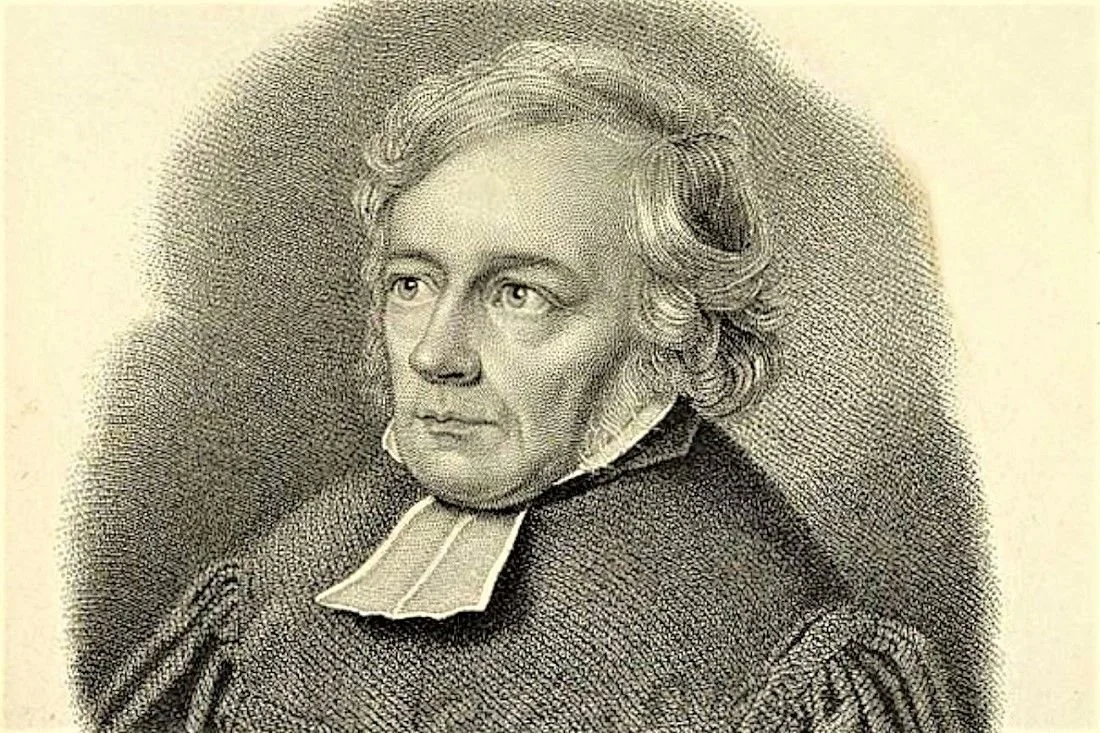
With this goal in mind, this essay will examine certain works of “the father of liberal German theology,”[1]Friedrich Schleiermacher, to attain a fuller understanding of his hermeneutical approach to the bible and the characters portrayed in it. As Nimmo puts it,
The theology of Schleiermacher has regularly been treated with at best suspicion and at worst hostility on account of its purportedly inadequate doctrines of revelation in general and Scripture in particular, such that few contemporary theologians seem to have attended to Schleiermacher’s doctrine of Scripture in any detail.[2]
Despite Nimmo’s negative assessment, numerous treatises and dissertations abound when it comes to the writings of Schleiermacher, but for purposes of this essay only two books, Hermeneutics: The Handwritten Manuscripts, and The Life of Jesus, will be scrutinized. The first book concerns Schleiermacher’s approach to biblical study and the second book demonstrates that approach in action. Both contain his words and both give clues, evidence, and proofs to who he was and what he truly believed. Both books show, as Sykes suggests, Schleiermacher’s attempt “to produce some criterion by which true and false in traditional theology might be discovered.”[3] Both will be discussed more fully, in the essay to follow.
Examination of Hermeneutics: The Handwritten Manuscripts
This text is a fascinating presentation on the inner workings of Schleiermacher. Translated by James Duke and Jack Forstman, Hermeneutics is a compilation of Schleiermacher’s own notes, class outlines, lectures, and addresses at various schools and academies in his lifetime. It consists of basically six manuscripts used by Schleiermacher his teaching that, essentially, allow the modern reader to be taught by Schleiermacher, himself. Through his teachings, the reader can experience, “a general hermeneutics, which sets forth the art of understanding every linguistic statement, oral and written” (3). This text is not lacking in value for “The development of thought manifest in these materials is rich and complex” (2). Furthermore, a great deal of information on Schleiermacher’s interpretational practices can be found the first manuscript presented in this book, The Aphorisms of 1805 and 1809–10.
These aphorisms fill up twenty-three pages and are “rawly” demonstrative of Schleiermacher’s core beliefs. The exciting aspect of this is that later in works such as The Life of Jesus, the reader can see his hermeneutical approach being applied. It is not just theory; Schleiermacher does what he teaches (contrary to the adage) or, at least, he attempts to do what he recommends to others. To this end, he has bravely created and provided 143 hermeneutical axioms for his listeners and readers to follow.
Some examples of his powerful statements in this section include the following aphorisms:
“Grammatical interpretation is the objective side; technical the subjective. Consequently, grammatical interpretation plays a negative role in hermeneutical construction, marking the boundaries; technical is the positive” (42).
“In interpretation, it is essential that one be able to step out of one’s own frame of mind into that of the author” (42).
“The various meanings of words must be understood by tracing them back to their original unity.” (43).
“The ordinary, careless way is to be satisfied with a vague impression of the parts so long as one thinks one has caught the general context” (44).
“An objective view of words leads to a mistaken view of figurative terms” (46).
“If every spoken statement is understood with the artist as the center, then everything that is given and available in the value of the language disappears, except insofar as it grasps the artist and determines his thinking” (49–50).
“In dealing with historical writings, determining what is pure description and what is mixed with judgments is a matter for technical interpretation, insofar as the author himself is assumed to have been conscious of the difference” (59).
Schleiermacher’s proclamations are succinct, yet meaty. They show a man representative of his times. Sydnor writes, “Along with the Enlightenment rationalists and freethinking Romantics, he rejected dogmatism, obscurantism, and any concept of God that limited human freedom and creativity.”[4] His Enlightenment convictions are seen in his promotion of the idea that it is possible for a researcher to know what an original writer meant or believed. It is only a matter of utilizing one’s mental resources and through the recognition of personal biases. Schleiermacher sees the hermeneutical goal and its obstacles and offers understanding to avoid the pitfalls.
These axioms also suggest that hermeneutics is more than just a simple, historical approach to investigation--it is an art form, too. Craig Watts writes in his article, “Unlike the strictly empirical method which looks only to the external, particular, and separable aspects of history, Schleiermacher was also interested in comprehending the inward, indivisible unity which underlies the externally perceptible” (77). It is in the search for clear understanding of original meaning and intention that a researcher finds truthful success. A less stringent approach only sets the course for naive inference and obtuse personal agendas.
In Schleiermacher’s mind, “The success of the art of interpretation depends on one’s linguistic competence and on one’s ability to knowing people” (101). The difference, then, between good and bad interpretation, is the depth and specificity of understanding between the knower and the known. Schleiermacher’s suggested approach goes to the heart and mind of the subject—what a person (including God and Jesus) truly meant when he/she said something. This involves a “command of language” (101) and the “ability to know people . . . especially to a knowledge of the subjective element determining the composition of thoughts” (101). This sounds like a monumental effort and it is, but it is necessary in Schleiermacher’s opinion for hermeneutics to be truthful and beneficial to its recipients.
Schleiermacher reiterates the danger of poor hermeneutics further along in Hermeneutics when he writes in Manuscript three,
Interpretation may continue smoothly for some time without actually being artless, because everything is held together in a general picture. But as soon as some detail causes us difficulty, we begin to wonder whether the problem lies with the author or with us. We may assume that the author is at fault when our overview of the text uncovers evidence that the author is careless and imprecise, or confused and without talent (119).
Schleiermacher is suggesting in this passage that the difficulty of interpreting a text is not just in the confusion of deliverance, but also in the confusion of analysis. Hermeneutics are “artless” when a general approach is only taken. Good interpretation involves a more specific approach. Reader assumptions, too, can be a bad thing because they assume aspects of reality or history that may or may not be true.
Artistry requires time, knowledge, and imagination until the project is completely and successfully finished; artful hermeneutics in many ways has the same requirements. The person participating in interpretation must patiently research a biblical passage without rushing to a conclusion. Furthermore, he or she must have a good knowledge base to begin making judgments on the text. Finally, they must have the depth of perception to see beyond the words into the life and purposes of the original author. It is this imaginative aspect that makes Schleiermacher’s approach so powerful and yet, possibly problematic.
Later in Manuscript Three, Schleiermacher attempts to more greatly define his understanding of interpretation when he expands upon what he means by “grammatical” versus “technical” interpretation, stating the following:
“Grammatical interpretation. Not possible without technical interpretation. Technical interpretation: not possible without grammatical interpretation” (161).
“Grammatical interpretation. Understanding is gained by seeing how all of the parts cohere. Technical interpretation: Reconstructing the overall coherence of the text is not complete until all of the details are treated” (162).
“Grammatical interpretation. It is directed toward language—not toward language as a general concept or as an aggregate of discrete units, but toward the nature of a particular language. Technical interpretation: It is directed toward the possible ways of combining and expressing thoughts--not as a general concept, as logical laws, or as an empirical aggregate, but as a function of the nature of the individual person.”[5]
The gist of these passages seems to suggest that while grammatical interpretation focuses on what its title implies, grammar and language, technical interpretation focuses on an individual’s purposes and intent in the language and words chosen. Grammatical interpretation deals with what a person said; technical interpretation deals with what a person meant by what he/she said considering his/her background and situations. Logically, it is impossible to have a technical interpretation without first having a grammatical interpretation. It seems obvious, but one cannot know what has been said until it has been said. Schleiermacher would also say, however, that it is impossible to know what has been said until the meaning of what has been said is understood by the hearer. The nuances of these two ideas can be confusing.
One example explaining the differences between these two aspects of interpretation concerns the statement, “You are cool.” If someone were to read those words without knowing the individual who wrote them, without knowing who it was written to, without understanding the circumstances instigating the utterance, and without some knowledge of the style of language typically used by the author, the final conclusion to the meaning of the sentence could be ambiguous.
On its surface, the statement literally indicates that the author is saying that the person they are addressing needs to put on a sweater. The person is “cool” as in their body temperature is cold. However, if the reader knows that the author likes to use slang in his/her language and that the person being addressed is popular in society, then the term more likely means that the person is socially admired. If, for Schleiermacher, hermeneutics is “the art of understanding, that is, of the thoughts embodied in the words or writings of another,”[6] then the art of understanding the phrase, “You are cool,” involves much more than just the superficial reading and understanding of the words. It involves knowing what the author intended when he/she said what he/she said.
Schleiermacher sums it up when he says, “A sentence may be quantitatively misunderstood when it is not grasped as a whole; it may be qualitatively misunderstood when irony is taken too serious, and vice versa...Misunderstanding means to confuse one aspect of the linguistic value of a word or form with another.”[7] It is this confusion that Schleiermacher seeks to avoid and is teaching against in his Hermeneutics.
To aid in his presentation, he might have written on a chalk board this diagram taken from the margins of his notes for his viewer’s edification:[8]
DIAGRAM TBA
This diagram shows the presentation and reception of the bible. As Schleiermacher sees it, all aspects converge somewhere between these four areas. The “divinatory method seeks to grasp the individuality of the author by transforming the interpreter himself into the other.”[9] The “comparative” approach begins with an assessment of other similar circumstances and their significance. The grammatical and technical points have already been addressed previously in this treatise. Where the Truth lies in interpretation depends upon one’s core values.
No doubt, Schleiermacher would probably begin his approach in the lower half, focusing on what his mind and intellect could tell him about the text, both superficially and in depth. Karl Barth concluded that Schleiermacher, most likely, would have insisted that, “Grammatically and psychologically, then, we are to deal with everything at a purely human level, and here, too, everything must be according to the universal rules.”[10] A fundamentalist Christian would likely only remain in the upper left quadrant. A postmodern liberal Christian would likely stay in the bottom right quadrant. However, as mentioned in a previous treatise, what was most important to Schleiermacher was that the text of the bible be relevant to Christianity. Dogma was less important than real-life application. In his writings, “Schleiermacher helpfully emphasizes that there is more than one mode of speech in religion.”[11]
This opinion has something to do with Schleiermacher’s label of a liberal theologian. His approach to biblical interpretation “has come under fire in recent years as an unjustifiable psychologizing of the interpretive task.”[12] Most people desire to simplify religion; he sought to demonstrate its complexity. However, he has been judged harshly for his work being “not a critical search for the historical Jesus, but a portrait of the Jesus Christ of Schleiermacher’s own system of theology.” It almost seems ironic that Schleiermacher, who advocated taking great care in the hermeneutical approach so as not to taint conclusions regarding the bible with personal biases, is accused of doing that, himself. His writings on Jesus have been the center of controversy for some time. It is to Schleiermacher’s The Life of Jesus and his examination that this treatise now turns.
Examination of The Life of Jesus
Many scholars and theologians have sought to present a historically and hermeneutically accurate portrayal of the founder of Christianity—Jesus Christ. Names like Marcus Borg, John Crossan, and Albert Schweitzer are commonly associated with this endeavor. Nevertheless, adding to his renown, Schleiermacher’s scholarly presentations had “the distinction of being the first course of academic lectures ever given on the subject.”[13] It was the beginning of the historical-literary study of the bible and Christianity, moving them from the pulpit to the podium. Schleiermacher’s work on Jesus was “one of the first ‘lives’ to appreciate fully the need to see the figure being studied as set in that context.”[14]As such, Schleiermacher set out to apply the tenets of hermeneutics as best he knew how.
The result is a comprehensive study of the life of Jesus (again, a work that has the history and potential for innumerable treatises and dissertations) from a liberal theologian’s viewpoint. It is structured into four parts, the first being most pertinent to the thesis of this paper. The other three parts deal with three periods of Jesus’ life--Jesus’ life before his public appearance, Jesus’ public life until His arrest, and Jesus’ life from His arrest to the Ascension. The first part, which acts as Schleiermacher’s introduction to the examination of the life of Jesus, offers some valuable information to the reader on the approach of this book. It is in this section’s presentation that the reader can perceive Schleiermacher’s own hermeneutical approach directing his efforts.
Schleiermacher begins by stating, “If a historical presentation wishes to be actual history, it cannot restrict itself only to what is externally perceptible.”[15] Here, Schleiermacher is advocating a deeper approach to examination--one that goes beyond superficial appearances. He goes on to write that, “If we only grasp the outwardly perceptible in the activity of a man, the connection is lost and the external element may be presented in great detail without the narrator knowing anything at all about what is inward.”[16] If Jesus’ activities, including His words and deeds, are to be meaningful to the reader, then there needs to be a connection by the reader. Schleiermacher suggests that his approach to the biography allows for that to occur. He states:
What is the actual task of a biography which is to correspond wholly to the idea of a description of a life? We have to reply: The task is to grasp what is inward in the man with such certainty that it can be said: I can say with a measure of assurance how what is outward with respect to the man would have been if what affected him and also what he affected had been different than was actually the case, for only then do I have an actual knowledge of what is inward in him, because I can also construe it as the constant factor to different results.[17]
In other words, is a doctor only a doctor when he has a stethoscope stuffed in his ears? Is a teacher only a teacher when he/she is up in front of class? If Jesus is the Son of God sent to save all humanity, does that only include people who fully know of Him? Schleiermacher would assert that knowing about people’s lives, their training, their activities, or their interaction with people around them provides a more powerful understanding of their characters and mission than just reading or hearing the words, “She’s a doctor. He’s a teacher. He’s God incarnate.” In order to gain this insight into a person’s being, the seeker must look deeply and comprehensively into the person’s life. Schleiermacher continues:
One cannot think of an individual without at the same time thinking of him in connection with the general conditions that determine his existence, and there can be no talk of this unless one sets as a maximum the attempt to establish what a man determined by such conditions would have brought forth as results; but he cannot be torn loose from the general conditions of his individual existence.[18]
Again, Schleiermacher’s main hope was to make Christianity relevant and real to those in his time. The preceding passages may seem epexegetical, but he wanted his readers to understand his intentions before they began reading his examination of Jesus. It was all about making a connection to Jesus that meant something in the Christian’s life, despite the possible controversies to his approach.
Like many of the other liberal theologians of his day, Schleiermacher dealt with difficult concepts such as, “If therefore we cannot extract Christ from his historical setting in order to think of him within that of our people and our age, it follows again that the knowledge of him has no practical value, for he ceases to have exemplary character”[19] and “for Christ cannot serve as an example if we cannot conceive of him under the circumstances in which we live.”[20] These statements serve as a precursor to Schleiermacher’s foundation for his study of Jesus. He remarks:
In this way, then, we have arrived at the initial stages of the story of our whole undertaking, for it is apparent that the whole efficacy of Christ, viewed from its historical side, depends actually on the resolution of this task, namely, that such a picture of Christ with this truth emerges as can only take shape as we bring together all separate, scattered elements. Therefore we must also say that every idea of Christ that has passed over in any fashion, either into a written document, or into the institutions of the Christian community, or into any other form of living tradition, is part of the resolution of our task.[21]
For Schleiermacher, this meant asking the tough questions, actually engaging the opponents to Christianity in their arguments, and attempting to understand the concept of Christianity using the modern world’s tools and explanations, but all for the purpose of empowering the Christian message to the seeker of his day.
It also meant approaching the Gospels with a more questioning eye than his traditional background and peers had advocated. Schleiermacher writes: “For the purely historical point of view which we must take it is somewhat disadvantageous that we have at our disposal so little of the way of the life of Christ was conceived by his opponents; and from all of this that occurs even in our own Gospels only very few such judgments can be obtained which go back to something factual.”[22]
Hermeneutically, Schleiermacher desired more to base his examination on of the life of Jesus; what sources he had were imbalanced, at least in his scholarly opinion. There were little other texts to compare with the bible. Furthermore, concerning the life of Jesus, all that was available were the four Gospels and those appeared to have inconsistencies and apparent discrepancies between them.
His final conclusion was that “It is undeniable that we cannot achieve a connected presentation of the life of Jesus.”[23] That was his caveat to his study. His conclusions, therefore, were based on the limited resources he had at hand, including the texts and modern investigatory tools of study. Those factors led him to his controversial conclusions and observations. Schleiermacher’s The Life of Jesus is “hermeneutics actually at work in the labor of giving a detailed reading of the texts.”[24]
As with his Hermeneutics, Schleiermacher was also criticized for his application of interpretational rules in The Life of Jesus. One modern scholar noted that “Schleiermacher . . . was remarkably interested in both a new dogmatic formulation of the person of Christ, and the historical Jesus. This dual interest was a strength, but it also put his Christology under strain.”[25] This scholar goes on to question both Schleiermacher’s use of the Gospel of John as the main model of Jesus and the non-affect personality he attributes to the Son of God.[26] This whole approach “would clearly place a question-mark not only over the Christology, but over Schleiermacher’s doctrine of God as well.”[27] It seems that Schleiermacher may have gotten too personal with his hermeneutical approach to biblical interpretation.
In Craig Watts’ article, he states that Schleiermacher’s study of Jesus failed “because of questionable methodology, and because of his unwillingness or inability to set aside this dogmatic preconceptions which cannot be confirmed by a critical analysis of the sources.”[28] He further adds that, ‘we should not be surprised if Schleiermacher’s intention is somewhat confused, or at least double-minded.”[29] As such, Schleiermacher’s use of the Gospel of John seems self-serving because John is the Gospel that most agrees with Schleiermacher’s mystical expression of faith. Watts remarks that, “if he had decided on critical grounds against the Gospel of John as a historical source then he might have brought very different interpretative categories to his historical study and a different Christology would have resulted.”[30] Sadly, it appears a common scholarly opinion that Schleiermacher fell prey to the very problems he so adamantly urged others to avoid.
The final product is a study that is comprehensive but slanted. That does not mean it has no merit; its concepts have been utilized by many modern scholars, but considering Schleiermacher’s own hopes for its objectivity or truthfulness, it falls short. It almost seems like more of Schleiermacher’s individual character comes out rather than Jesus’ character.
Conclusion
Schleiermacher assuredly was a man of vision and heart. The concept of a liberal German Pietist–Theologian is almost humorous because it seems so implausible and yet, Schleiermacher appeared competently to be able to synthesize his Christian faith with the Enlightenment thinking of his day.
In his theological and hermeneutical approach, it is clearly evident that he was a man who meant well and generally thought well. He hoped to bridge the obstacles that confounded and confused both Christian and non-Christian alike in his times on how to approach the bible. He sought to demonstrate that it was possible to find both fact and faith in the bible. He advocated for a deeper understanding of who Jesus and other literary characters really were from the Bible. He suggested that their lives still had meaning and purpose—despite the fact that modern science disregarded Christian doctrine as suspect. For this, Schleiermacher is to be commended.
Of course, as with any scholar, there is a flip-side to Schleiermacher. Dole writes, “Neither the claim that religion is a product of human capacities and activities, nor the claim that doctrines are late and non-essential developments within the historical life of religion have endeared Schleiermacher to religious conservatives.”[31]
Moreover, as has been pointed out, his approach to a fairer, purer approach to biblical interpretation often fell to the same dangers he warned others about. The result was an idealistic and unrealistic approach that he sometimes applied, hypocritically. Often, his own presuppositions appear to have clouded his interpretations and instead of focusing holistically on the bible, he was caught up by his own dogmatic understandings. Richard Niebuhr states that “his [Schleiermacher’s] perspective on history is informed by a definite bias.”[32] This bias is what sadly leads Schleiermacher down the same road as many of his predecessors, his contemporaries, and future theologians following in his footsteps.
That being said, Friedrich Schleiermacher was, and still is, a very respected theologian. Niebuhr states that “none of these faults is sufficient to obscure the lasting significance of the man.”[33] Keith Clements remarks, “Acknowledged debts to his thought, and evidence of his influence, can be found in leading Protestant theologians, biblical scholars and philosophers of religion until well into the twentieth century.”[34] Stephen Sykes claims, “There is scarcely a subject . . . on which Schleiermacher does not write something balanced and penetrating for our times.”[35] Karl Barth adds, “He [Schleiermacher] discovered and represented in personal union a consistent philosophy and just as consistent a theology.”[36] Finally, Martin Redeker states that Schleiermacher “created the classic theological statement of theological Protestantism . . . and ushered in a new period of systematic theology by applying to theology the method of transcendental philosophy.”[37]
Schleiermacher’s contributions to theology and hermeneutics are profound. For such a liberal theologian, his scholarly and apparently kind approach to interpretation still afforded him much honor and courtesy. Syndor states,
Scholars agree that Schleiermacher addressed almost all the perennial issues of modern theology, including the relationship between history and knowledge, the relationship between science and faith, the source of religious authority, the relation of Christianity to the world’s religions, and the nature of God in a culture that eschews metaphysics in favor of immediate experience and empirical observation.[38]
Consequently, Schleiermacher’s cutting edge approach to biblical interpretation influenced both Western theology and hermeneutics in his own time, and into postmodernity.
Biography
Barth, Karl. The Theology of Schleiermacher. Michigan: William B. Eerdmans, 1982.
Bray, Gerald. Biblical Interpretation. Lisle: InterVarsity, 1996.
Corliss, Richard L. “Schleiermacher’s Hermeneutic and Its Critics.” Religious Studies 29, no. 3 (1993): 363–79.
Clements, Keith W. Friedrich Schleiermacher: Pioneer of Modern Theology. Minneapolis: Fortress, 1987.
Dole, Andrew. “Schleiermacher on Religion.” Religion Compass 4, no. 2 (2010): 75–85.
Gerrish, B. A. A Prince of the Church. Philadelphia: Fortress, 1984.
Marshall, Bruce D. “Hermeneutics and Dogmatics in Schleiermacher’s Theology.” Journal of Religion 67, no. 1(1987): 14–32.
Niebuhr, Richard R. Schleiermacher on Christ and Religion. New York, NY: Charles Scribner’s Sons, 1964.
Nimmo, Paul T. “Schleiermacher on Scripture and the Work of Jesus Christ.” Modern Theology 31, no.1 (2015): 60–90.
Redeker, Martin. Schleiermacher. Philadelphia: Fortress, 1973.
Schleiermacher, Friedrich. Hermeneutics: The Handwritten Manuscripts. James Duke and Jack Forstman, trs. Atlanta: Scholars, 1977.
_________. The Life of Jesus. Philadelphia: Fortress, 1975.
Sykes, Stephen. Friedrich Schleiermacher. Richmond: John Knox, 1971.
Syndor, Jon Paul. “Ramanuja and Schleiermacher on Scripture: An Essay in Comparative Theology.” International Journal of Hindu Studies 21 (2017): 55–81.
Vial, Theodore. Schleiermacher: A Guide for the Perplexed. T&T Clark: 2013.
Watts, Craig M. “The Intention of Schleiermacher in The Life of Jesus.” Encounter 46, no. 1 (1985): 71–86.
[1] Jon Paul Sydnor, “Ramanuja and Schleiermacher on Scripture: An Essay in Comparative Theology, International Journal of Hindu Studies (2017): 63.
[2] Paul T. Nimmo, “Schleiermacher on Scripture and the Work of Jesus Christ,” Modern Theology 31, no. 1 (2015): 61–62.
[3] Stephen Sykes, Friedrich Schleiermacher (London, England: Lutterworth, 1971), 46.
[4] Sydnor, 64.
[5] Ibid., 162-163.
[6] Karl Barth, The Theology of Schleiermacher (Michigan: William B. Eerdmans Publishing, 1982), 178.
[7] Schleiermacher, Hermeneutics, 217.
[8] Barth, 182.
[9] Richard R. Niebuhr, Schleiermacher On Christ and Religion (New York, NY: Charles Scribner’s Sons, 1964), 87.
[10] Ibid., 183.
[11] Stephen Sykes,46.
[12] B.A. Gerrish, A Prince of the Church (Philadelphia, PA: Fortress, 1984), 23.
[13] Ibid., 49.
[14] Keith Clements, Friedrich Schleiermacher: Pioneer of Modern Theology (Minneapolis, MN: Fortress, 1987), 55.
[15] Friedrich Schleiermacher, The Life of Jesus (Philadelphia, PA: Fortress, 1975), 4.
[16] Ibid., 6.
[17] Ibid., 8.
[18] Ibid., 9.
[19] Ibid., 11.
[20] Ibid., 16.
[21] Ibid., 18.
[22] Ibid., 36–37.
[23] Ibid., 43.
[24] Marshall, 15.
[25] Clements, 57.
[26] Ibid., 57.
[27] Ibid., 57.
[28] Watts, 72.
[29] Ibid., 82.
[30] Ibid., 83.
[31] Andrew Dole, “Schleiermacher on Religion,” Religion Compass 4, no. 2 (2010): 84.
[32] Niebuhr, 91.
[33] Ibid., 17.
[34] Clements, 7.
[35] Sykes, viii.
[36] Barth, 273.
[37] Martin Redeker, Schleiermacher: Life and Thought (Philadelphia, PA: Fortress, 1973), 5.
[38] Sydnor, 63.
(Copyright by John S. Knox, 2026)